AI CASE STUDY
You just got a 78-page RFP.
Deadline: 48 hours
Monday, 9:42 AM
You open the document.
Scroll… Scroll… Scroll…
Half the answers already exist somewhere inside company. User just don’t know where.
❌ Today
- Days of writing
- Endless copy-paste
- Constant expert follow-ups
✅ With AI Agent
- Draft in minutes
- Auto-filled responses
- Ready for review
0
Time Reduction
3x
Faster Drafting
↓
Expert Dependency
The challenge was not generating documents.
The challenge was helping users trust and validate AI-generated content
while reducing document creation time
CORE PROBLEM
Creating Business Documents Takes More Time Than It Should
Teams spent more time searching through previous proposals, Slack threads, PDFs, and expert feedback than actually writing responses. The information already existed — it was simply fragmented across the organization.
Hours Lost Searching
Proposal teams manually searched through old RFPs, internal folders, and scattered documentation to reconstruct answers.
Expert Dependency
Subject matter experts repeatedly answered similar questions, creating bottlenecks and slowing proposal turnaround time.
Accuracy & Consistency
RFP responses involved compliance, business nuance, and contextual accuracy — making blind automation risky.
WHAT WE HEARD FROM USERS
Every review starts from scratch.
Information exists, but finding it is painful.
I spend more time looking for previous versions than creating the new document.
Why AI | Why couldn't traditional software solve this: AI Opportunity Map
Traditional tools could store knowledge. They couldn't turn it into a document.
Search multiple systems
Compare old documents
Validate information
Create document manually
AI Opportunity
Automate repetitive work
Understand user intent
Retrieve relevant knowledge
Generate first draft instantly
Keep users in control
Key Insight
We didn't use AI to replace document creators. We used AI to reduce the time spent searching, organizing, and drafting information.
Human + AI workflow
AI accelerates the process. Humans stay in control.
AI handles retrieval and drafting while users review, refine, and approve the final document.
Define intent
User describes the document they want to create.
Retrieve knowledge
Finds relevant content from organizational sources.
Generate draft
Creates a structured first draft in seconds.
Review & refine
User validates information and edits content.
Approve & publish
Final document is approved and shared.
Key Design Decisions
Design Decision 01
Let AI handle the first draft
Instead of starting with a blank page, AI prepares the first draft so users can focus on refining it.
Design Decision 02
Build on what already exists
AI uses trusted company documents and past work instead of creating content from scratch.
Design Decision 03
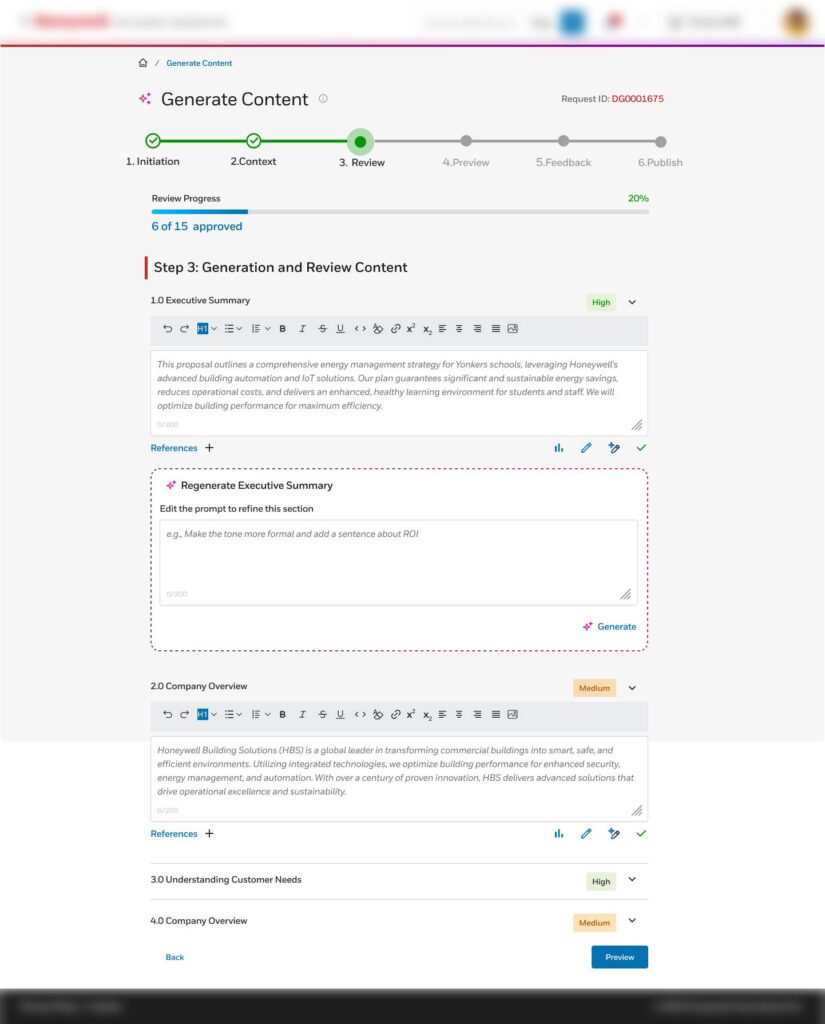
Help users trust the output
AI shows where the information came from, making it easier for users to verify and edit the content.
⭐ Key Decision
Keep users in control
Every document goes through human review before it's shared. AI helps with the work, but people make the final call.
Design Principle
AI assists. Humans decide.
AI Case Study
Designing workflows that help people get work done faster.
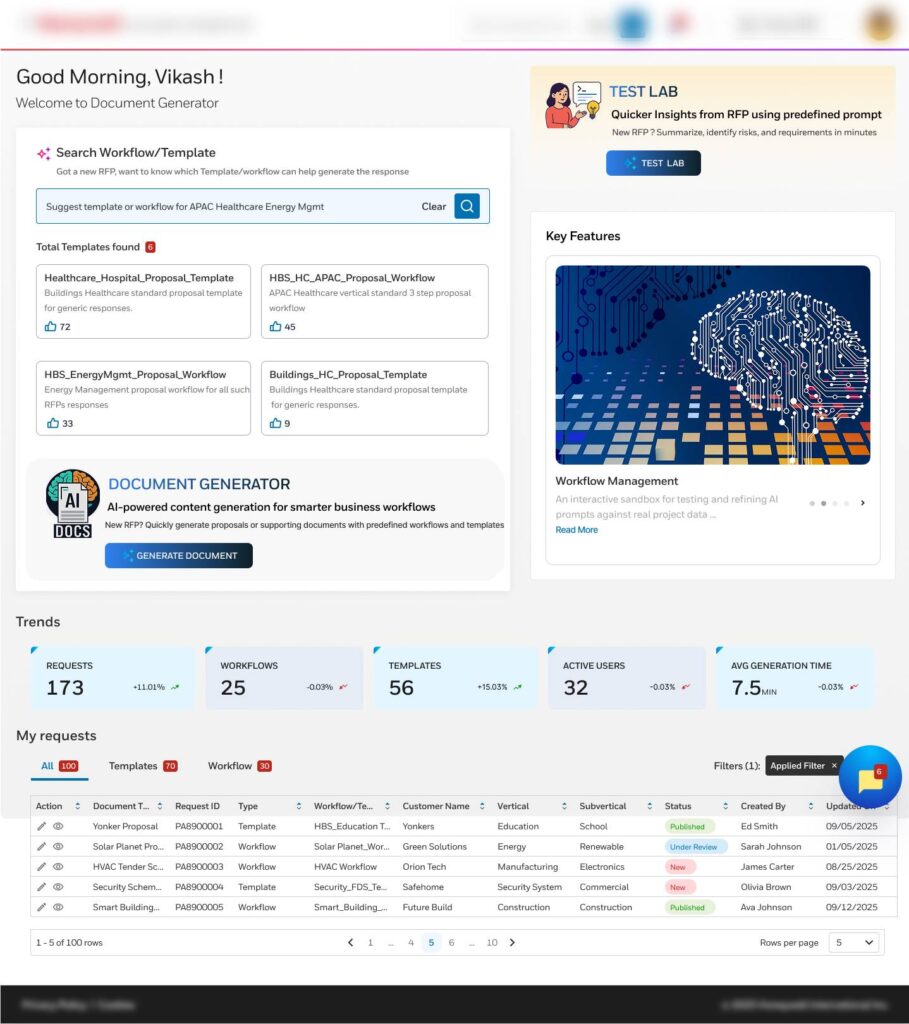
Users feel lost about where to start and what step comes next →
Design SolutionGuided dashboard showing clear start points, steps, and live status
AI-Powered Document Generation
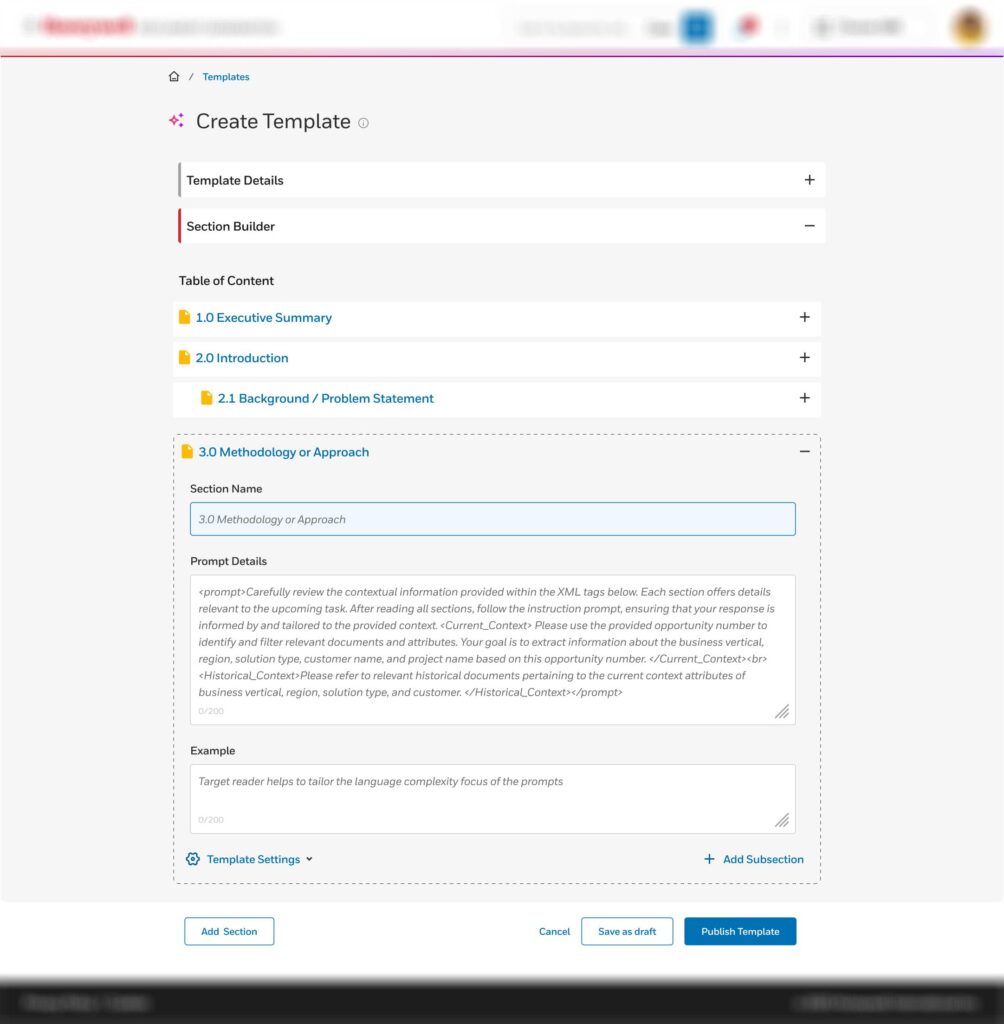
Generate structured documents automatically using AI-driven prompts and templates.
Search Workflow and Templates
Configure and manage reusable search workflows and document templates.
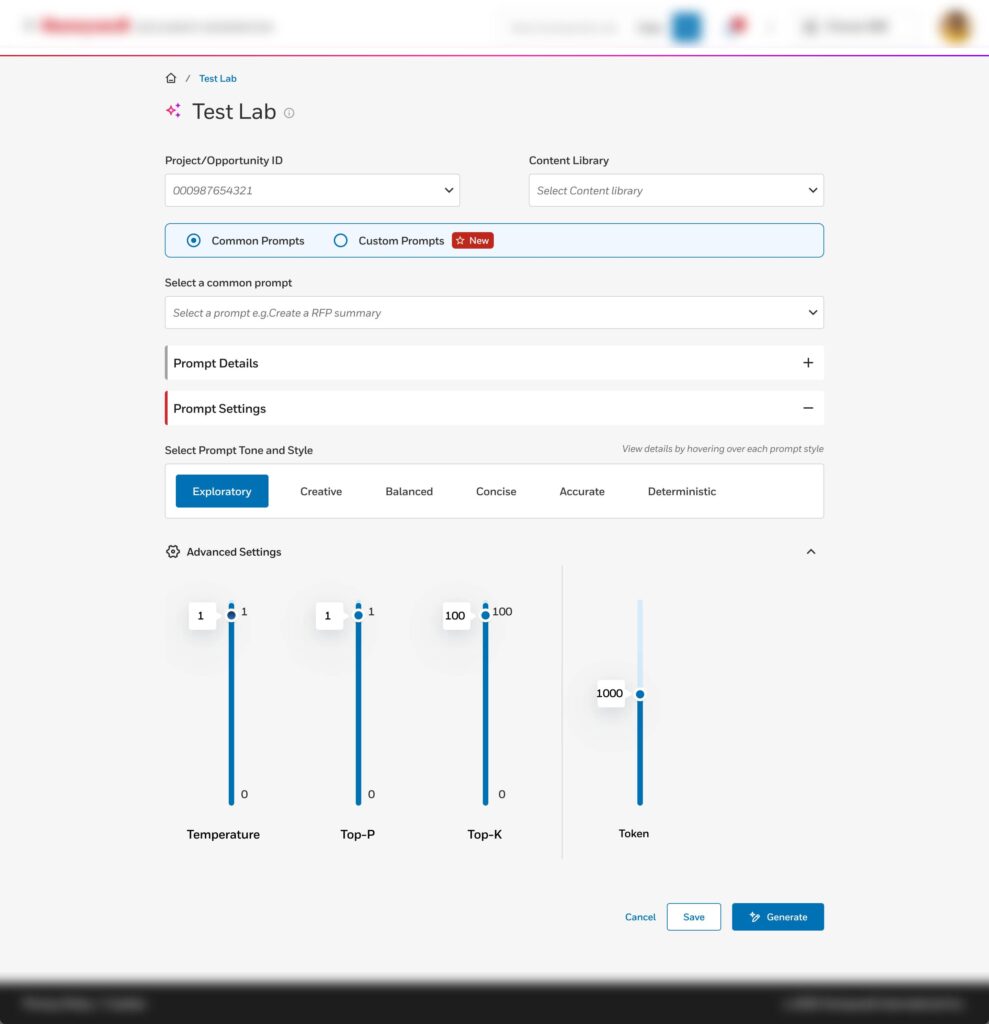
RFP Search Using Predefined Prompts
Quickly find relevant RFPs using standardized, ready-to-use AI prompts.
Core UX Principle
Keep AI editable, explainable, and visible inside the workflow.
Leave a Reply